

How does relationship counselling change with the times? From traditional marriage guidance to Relate to today's inclusive Relationship Works

What does it take for a relationship counselling support service to survive and thrive for over 80 years? The answer lies in our willingness to evolve whilst staying true to our core values. From offering marriage guidance to opening up to cohabiting couples, the LGBTQI+ community, families and individuals - and all kinds of relationships, we've always adapted to meet our community's needs as society changes and legislation is updated.
Whether you're seeking relationship counselling, family counselling or sex therapy in Bristol or Bath, or prefer the flexibility of online counselling, our commitment stays the same. To help people build stronger, healthier relationships.
There have been a number of changes at Relationship Works (previously Relate Avon) over the last few months, so here is the story of how we got here …
The historical background - 1930s
Social changes were underway in the 1930s. Relationship expectations began a shift towards greater emphasis on romantic love and companionship, modest divorce reform, and growing discussion of sexual health.
1937 - Matrimonial Causes Act: Just a year before the Marriage Guidance Council formed, this act expanded the grounds for divorce beyond just adultery to include cruelty, desertion, and "incurable insanity."
World War II and its aftermath accelerated social change. The late 1940s saw a massive increase in divorces - according to the UK Office for National Statistics (ONS)the number of divorces was exceptionally high in 1947, reflecting the dissolution of short-lived wartime marriages and societal changes.
National Marriage Guidance
The Marriage Guidance Council was established in 1938 by Dr Herbert Gray to safeguard the family as a vital pillar of national life. In following years, local self-governing groups were set up around the country but affiliated to the national body.
Marriage Guidance - Bristol and Bath
In May 1944, the Bristol ‘Exploratory Committee’ of the Marriage Guidance Council held its first meeting. A separate group met in Bath a few months later. Both committees represented the local community, drawing members from social and religious groups and including prominent individuals.
At that time, they regarded their work as two-fold:
Delivering educational public lectures on relationships, marriage, sex and life stages. Reading the discussions now, it’s clear that their views were progressive for the time and in some cases, they even received complaints for their pioneering attitudes.
Providing more personalised help to individuals and couples through qualified medical, ministerial and psychological consultants.
Although counselling demand was low by modern standards, in these early years, Marriage Guidance Councils ran an extensive programme of talks on a wide range of issues. It’s hard to imagine the challenges people would have faced in the years after World War II.
1949 - Legal Aid and Advice Act: This was a game-changer for relationship services. It made legal representation for divorce affordable for the first time, leading to a surge in demand for counselling and support.
Culture shake - 1960s and 70s
The 1960s brought in seismic cultural shifts for relationships. As the post-war era's rigid social codes gradually dissolved, counselling moved further away from directive moral guidance to a focus on empathy and psychological understanding. Over this period, relationships shifted further away from duty or social expectation to an emphasis on personal fulfilment, emotional intimacy, and authentic communication.
In Bristol, our centre was instrumental in establishing “Off the Record”, the first youth counselling service in the city, still a thriving service.
In the 1970s, Marriage Guidance Councils relied on volunteer counsellors and local authority grants. Long waiting lists meant that some centres were starting to pay counsellors, albeit at token rates. The professionalisation of relationship counselling was beginning.
1967 - Sexual Offences Act: Partially decriminalised homosexual acts between men over 21 in private. This marked a step toward LGBTQI+ inclusivity Relationship Works champions.
1969 - Divorce Reform Act: This was the landmark shift to the "irretrievable breakdown" of marriage as the sole ground for divorce, moving away from the "guilty party" model that had dominated the 1940s.
Relate - relationship counselling updated
On Valentine’s Day 1988, the Marriage Guidance Council was renamed as Relate to recognise the wider relationship work with single people, cohabiting couples, same-sex couples, and families.
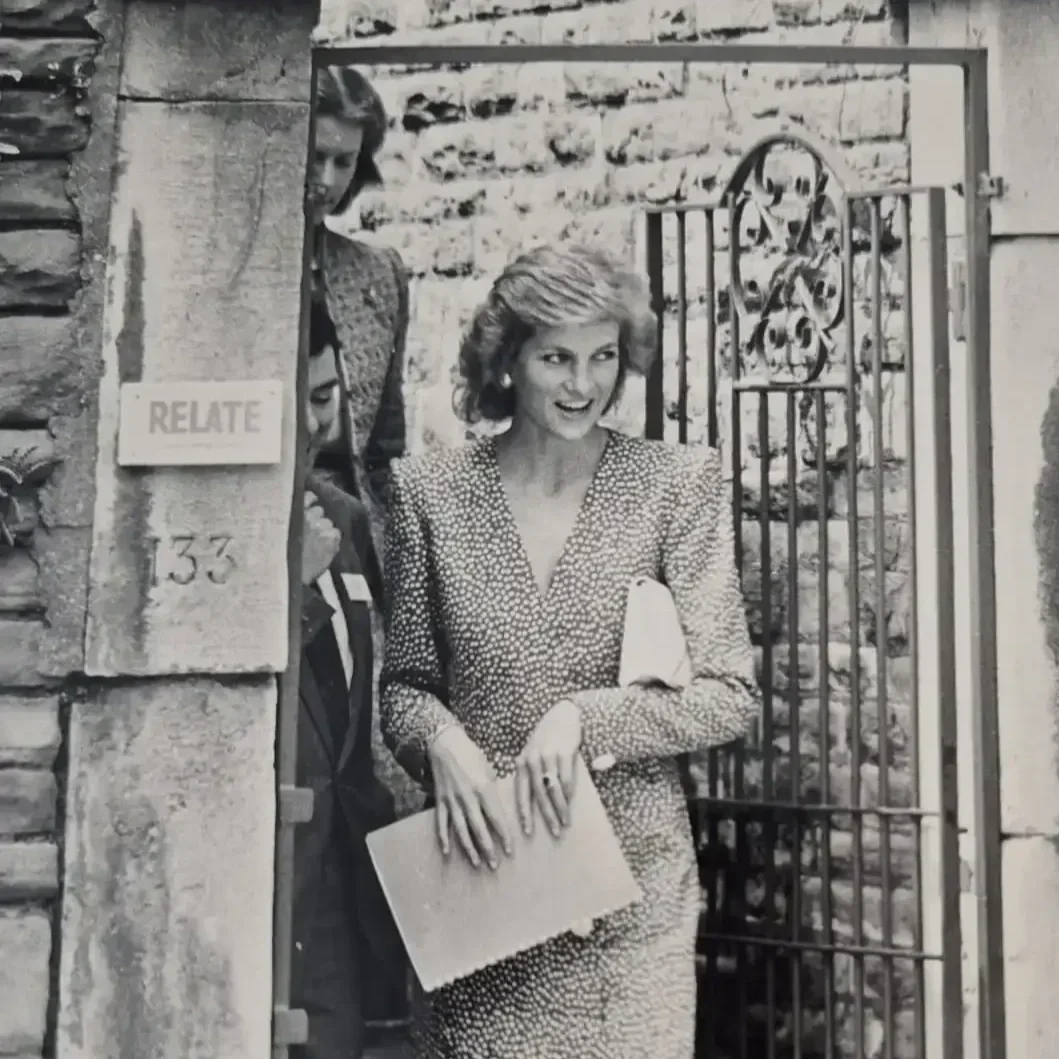
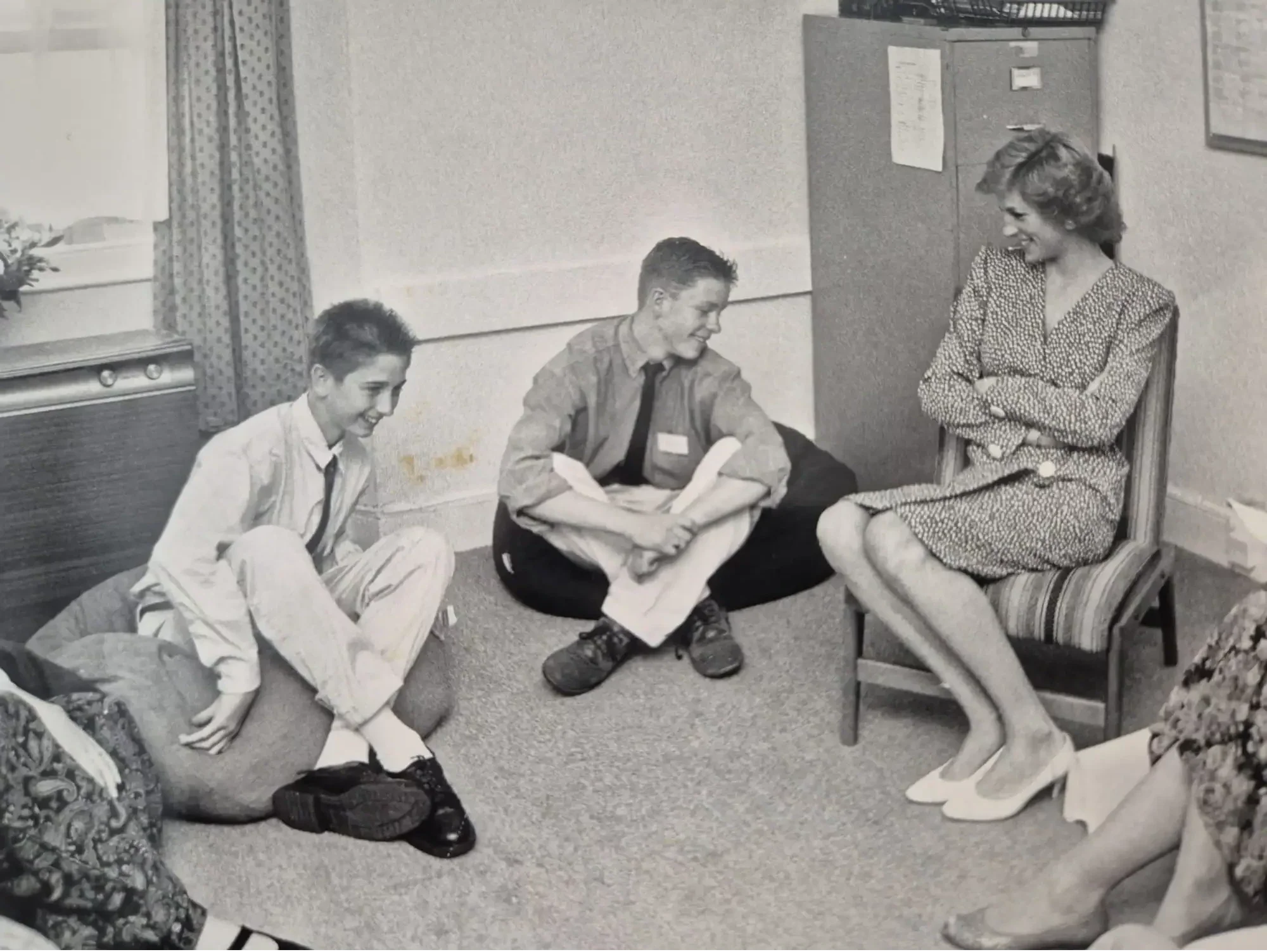
Princess Diana visited our Bristol premises in 1989, drawing major local media attention. She watched a domestic violence simulation, joined a parent-child role-play, and discussed relationships with teenagers.
1987 – Family Law Reform Act: Removed the legal distinctions between children born to married and unmarried parents, reflecting the rise of cohabiting couples, which the changes to Relate supported.
Relate Avon - always championing inclusivity
In 2000, the Relate Bristol and Relate Bath organisations merged into Relate Avon, a thriving, independent centre working within the national Relate federation.
Over the years, we have championed a progressive approach to relationships, inclusivity, and non-discriminatory service.
We were willing to fight for these principles. Our commitment faced a severe test during a high-profile case that took Relate Avon (as we were then) to the European Court of Human Rights. There, we upheld LGBTQI+ inclusivity and the court’s 2013 ruling supported us, validating our enforcement of non-discrimination.
2004 - Civil Partnership Act: Gave same-sex couples legal rights and responsibilities identical to civil marriage.
2013 - Marriage (Same Sex Couples) Act: Legalised same-sex marriage in England and Wales.
2020 - Divorce, Dissolution and Separation Act: Finally, there was a "No-Fault Divorce" in England and Wales. It removed the need to assign blame (like adultery or behaviour), allowing couples to separate with less animosity - a core of contemporary couples counselling.
From Relate Avon to Relationship Works as part of TLC
Fast forward to 2024, the national Relate charity faced significant challenges and was acquired by a much larger organisation, Family Action. This resulted in the dissolution of the Relate federation of independent charities.
For us at Relate Avon it became clear that our service and community would be best served by making two significant changes:
We rebranded as Relationship Works - a name that reflects what we believe: relationships can work better, when we work on them together.
We merged with TLC:Talk, Listen, Change, a national relationships charity with decades of experience, helping people across the country with crisis, abuse, and relationship breakdowns. Their vision is a society where everyone is surrounded by healthy, happy relationships.
Being part of TLC offers us a wide range of support and expertise, as well as new opportunities. We're still the same relationship counselling charity, but now part of something bigger.
2026 - Wedding Law Reform: A consultation is underway on modernising how people marry (allowing ceremonies on beaches, heritage sites, and recognising Humanist weddings), reflecting an "all kinds of relationships" philosophy.
Then and now: over 100,000 clients supported
Looking back over eight decades, much has changed but one thing remains the same. Our belief that every relationship deserves support, and that relationship work should be as natural as any other part of wellbeing. From 1938 to today, through each name change, this has remained Relationship Works’ north star. Relationships and lives improve when we work on them together.
If you are thinking about relationship counselling, sex therapy or family counselling, get in touch to find out more.