

Meet the Team: Neville, relationship counsellor
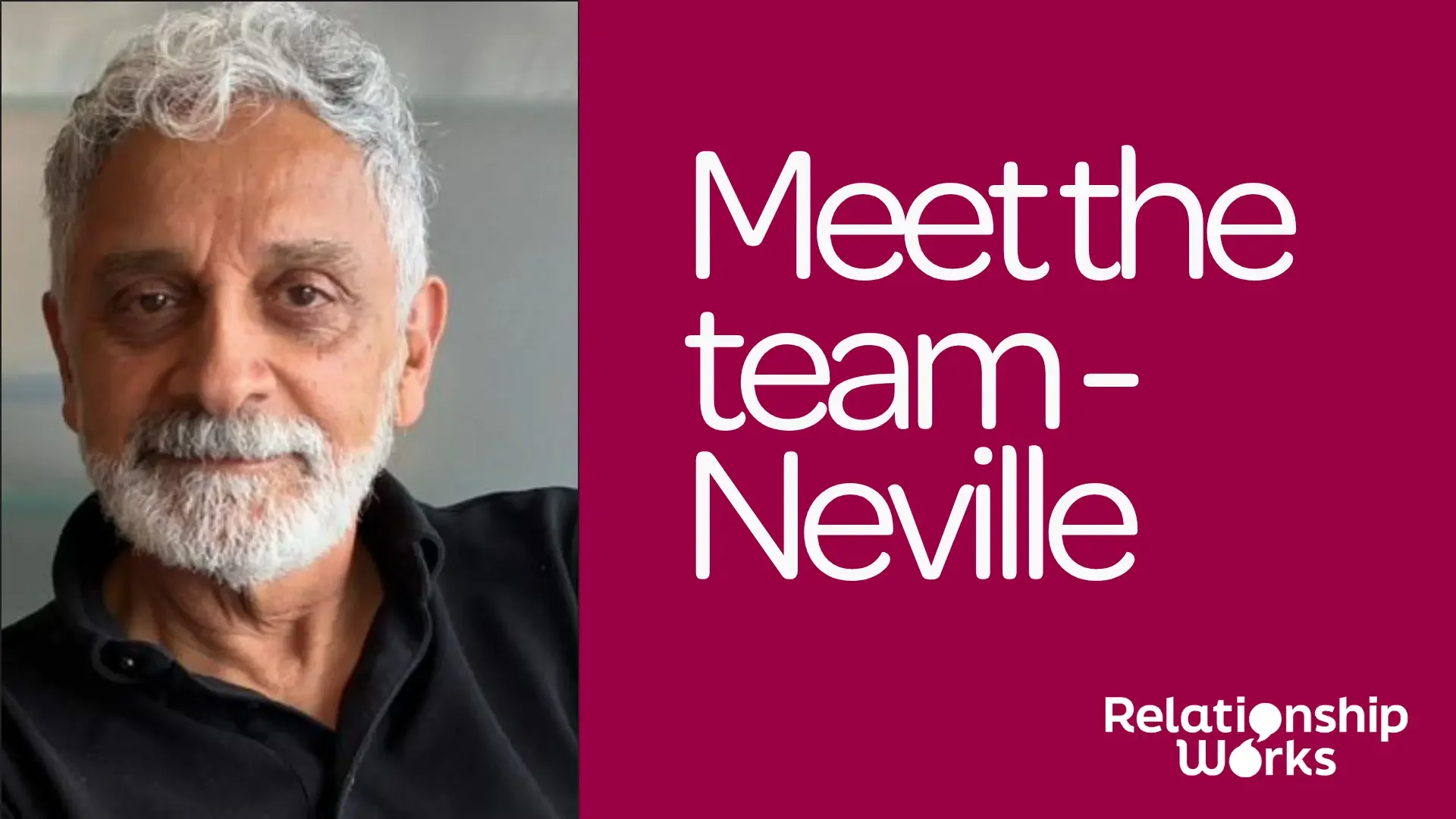
Relationships are built on connection, and when you’re seeking relationship counselling, it’s essential to find the right people who can truly listen and offer specialist support. At Relationship Works, our team of counsellors supports one another through professional supervision, meaning you benefit from our collective expertise.
As part of our new Meet the Team series, we want to help you get to know our warm and supportive counsellors.
We're delighted to introduce Neville, who brings a unique perspective to counselling after a fascinating career transition from running a hair salon to supporting couples and individuals to improve their relationships and lives.
Tell us about your career journey and how you got into counselling
I started my career as a hairdresser, training in London and then moving to Bristol, where I was a salon owner. I started at Relate about 20 years ago and worked as a counsellor for several years before taking a break to work in private practice supporting doctors' surgeries.
Since then I have retrained and updated my qualifications and am now back at Relationship Works using my skills and experience as a counsellor for couples and individuals.
Was there a reason you chose Relationship Works (formerly Relate Avon)?
The first thing that drove me to Relationship Works (then Relate) was to do some form of charity work. Perhaps naively, I didn't realise how much was involved in the training. So the course was exciting because it gave me such insights into this specialist field and how I could support people.
At Relationship Works, the professional support systems are all there. The supervision and monthly confidential case groups allow us to gain different perspectives from colleagues.
Why did you make the move from hairdressing to counselling?
They are actually surprisingly similar roles. It’s about being a people-person. I’m a proactive counsellor. I feel that people are making an investment in their relationship and themselves and I like to work with them to reach a resolution.
One difference is in the salon, people wanted my opinion. In the counselling room, I value neutrality. There are two sides to every story and I’m not there to take sides. I’m there to help both parties unpick their presumptions.
What's your counselling approach?
The biggest thing for me is getting them to communicate. Because if you can communicate properly without anger or angst you can get whatever you need out of counselling.
I tell people they've got three choices. They can keep the relationship exactly as it is, stay together and change their relationship, or they can leave it. And all three are okay.
What are the most rewarding moments in your work?
When there's a breakthrough. You suddenly see a change in people. They can even look different, you see a change in their personality, or in their communication style. Sometimes men find it more difficult to talk about their feelings. It’s really lovely when you suddenly see that they can open up and be vulnerable.
What value do you bring to counselling in particular?
Honesty. The more comfortable they are, the more willing they are to talk to you. It’s so important that a client feels comfortable with their counsellor - not everyone will be the right fit, which is not a reflection on the counsellor. Trust is paramount.
We value extending access to the benefits of counselling to more people, not just for crisis situations but to improve our relationships, lives, and communities. Can you share any thoughts on this?
I believe more people are open to counselling, but the issue lies in how they discover available resources. Awareness should start as early as school so that you know there are people willing to help in a crisis or if you just need someone to talk to. Not just for relationships but whatever counselling you need.
Diversity in counselling is important too. From my point of view as someone who's gay and Asian, I understand certain nuances - arranged marriages, for instance. Some communities get self-counselling from their families, so coming into a centre can be a big step. Having counsellors from different backgrounds can help clients feel more comfortable and understood, particularly since not all communities are equally likely to seek counselling.
What’s one general piece of relationship advice you would give?
Actually listen. There is one thing in hearing the words. There's another thing in repeating them back. So it's about checking - Have I got this right? Do I actually understand what you're saying?
What do you do to recharge after a busy week?
I’m always on the go! But I find that my 30 to 40 minute drive home helps me to mentally cut off.
So you tend to work in the Bristol office?
I really understand the convenience and flexibility of online counselling to widen access. But as a counsellor I prefer face-to-face, especially for couples, to observe every nuance of communication, body language, and interaction. In-person sessions offer dedicated time, free of interruptions. But it’s totally down to personal preference. Some couples love online relationship counselling.
What do you like to do in your free time?
Travel, particularly to far-away places like Asia. Recently, I visited Malaysia and I can’t praise the kindness of the people there enough. I was struck by their family orientation. South America is now on my wish-list.
What’s the best piece of advice you’ve ever received?
Why look at the shadows behind you, when there could be a rainbow in front?
What a positive way to end this interview. Thanks for your insights Neville.
Get to know more members of the Relationship Works team:
If you are interested in finding out more about relationship counselling or sex therapy, we’re here to help. Get in touch to find out more.